
Vegetable No-Till
Research & Development
Iowa Valley RC&D is committed to advancing regenerative practices in vegetable and specialty crop production. Our no-till work is intentionally two-fold. At our Grow: Johnson County demonstration site, located at the Johnson County Historic Poor Farm, we work no-till research and demonstration fields that serve as hands-on learning spaces for trainings, field days, and public education, highlighting both the benefits and the real-world challenges of no-till vegetable production.
Complementing this work, we partner with farmers across the region through a cost-share program that supports specialty crop producers interested in adopting innovative, sustainable no-till practices on their own farms. Together, these efforts create a shared learning network that accelerates knowledge exchange, reduces barriers to adoption, and supports more accessible and successful no-till implementation for all.

2026 No-Till Cost Share Program
Iowa Valley RC&D is a 501(c)(3) nonprofit organization based in Amana, Iowa, offering cost-share support to farmers interested in trialing innovative no-till production practices on their farms. No-till vegetable and specialty crop production involves a learning curve, as with any new practice. To help offset the costs of adopting or expanding this system, Iowa Valley RC&D will provide $1,200 per farmer to support no-till practices in their operations. Ten producers will be selected to participate in the program.
Through this cost-share program, participants will receive financial support in adopting no-till methods while contributing valuable insights to the broader farming community. Selected applicants will install or expand no-till practices in their operations during the 2026 season and have the opportunity to share experiences, lessons learned, and outcomes, providing a resource for other farmers interested in integrating no-till practices into their specialty crop production systems.
The 2026 No-till stipend program has reached capacity. If you have any questions please contact Lisa@ivrcd.org
No-Till Cost Share FAQ
Does my no-till project have to be a certain size?
No. Projects of any size are welcome - From sq ft to acres
Does it have to be vegetables?
While vegetables are our focus, other specialty growers are welcome to submit an application. Please send us an email if you have questions!
How much is the stipend?
$1200, paid in the spring of 2026. A W9 will be required for payment.
My idea does not sound exciting, should I apply?
It should be exciting to you! IVRCD is committed to supporting building no-till systems that function, reducing negative impacts on the environment and the farmer alike. Projects can be new and innovative or an expansion of a simple no-till practice on your farm you have perfected and are ready to scale. We too geek out and respect functionality over fashion when it comes to systems around the farm.
If selected, what is my commitment?
Participants will commit to:
Writing a short project plan and budget
One virtual Spring meeting for all participants
Implementation of your no-till project during the 2026 season
One Mid-season report with photos detailing implementation, lessons learned, and mid-season performance (estimated time: 30-40 minutes) - Due: July 31, 2026
A End-of-the-season report with photos detailing outcomes, lessons learned and recommendations for other growers. (estimated time: 30-60 minutes) - Due: November 2026
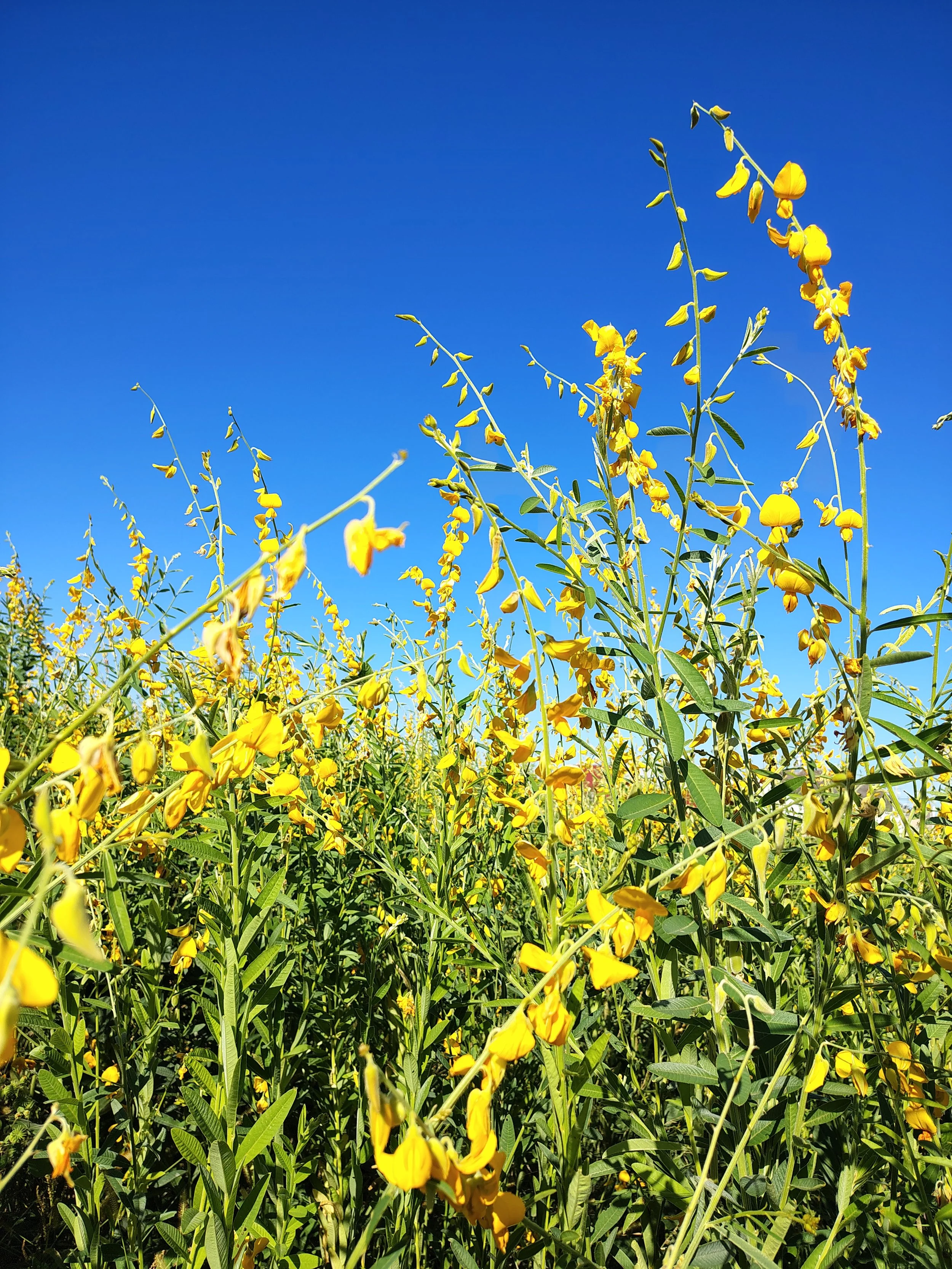
Sunn Hemp Cover Crop Trial in No-Till Field to Reduced Thistle Pressure
Over the past three years, our no-till demonstration project has generated valuable lessons, with perennial weeds, particularly thistle, emerging as one of our greatest challenges.
In response, we are establishing new no-till research and demonstration fields on the farm this year. These trials will include rolled rye, living clover systems, and a new deep-mulch raised bed field. Follow us on social media and sign up for our newsletter to stay informed as this work progresses!
New in 2026
At Grow: Johnson County
3-Year No-Till Trial Results
To advance regenerative farming practices for vegetable production operations, we conducted a three-year trial of diverse no-till crop and cover crop combinations at our Grow: Johnson County farm, spanning crops from cabbage to tomatoes. The trial assessed no-till system performance by evaluating yield, labor, pest management, and soil health outcomes. Results were compared with organic tillage systems that use roto-tillage, cultivation, fertilizer inputs, and cover crops to better understand the benefits and trade-offs of no-till vegetable production. See the factsheets below for project recommendations and outcomes.

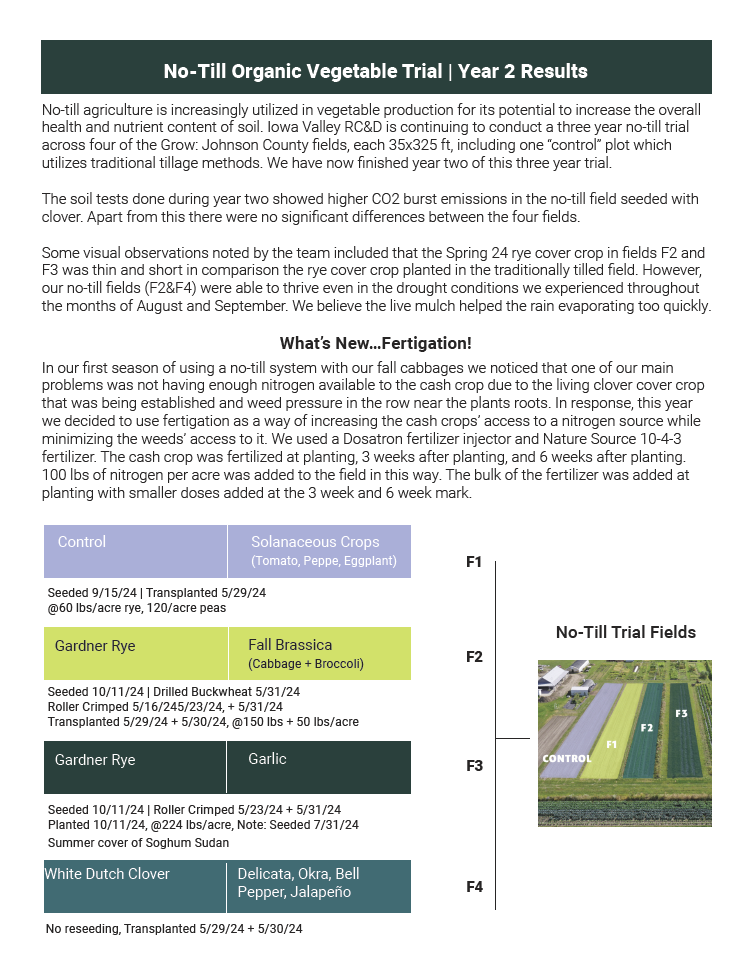
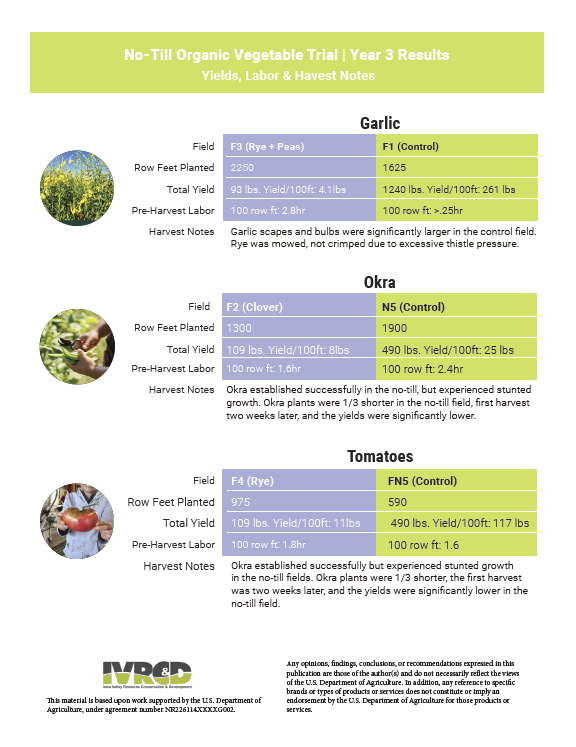
The project was made possible through funding from a USDA NRCS Conservation Innovation Grant #NR226114XXXXG002
Watch a No-Till Transplanter in Action

Keep up-to-date with the progress of our no-till trial, click the link to our Substack below.

“With the [no-till] stipend we purchased heavy duty double-sided ground cover for our cabbage production, drip tape for irrigation, and a truckload of organic compost to help restore and replenish the soil in our cabbage field.
Adrian White, Jupiter Ridge Farm